
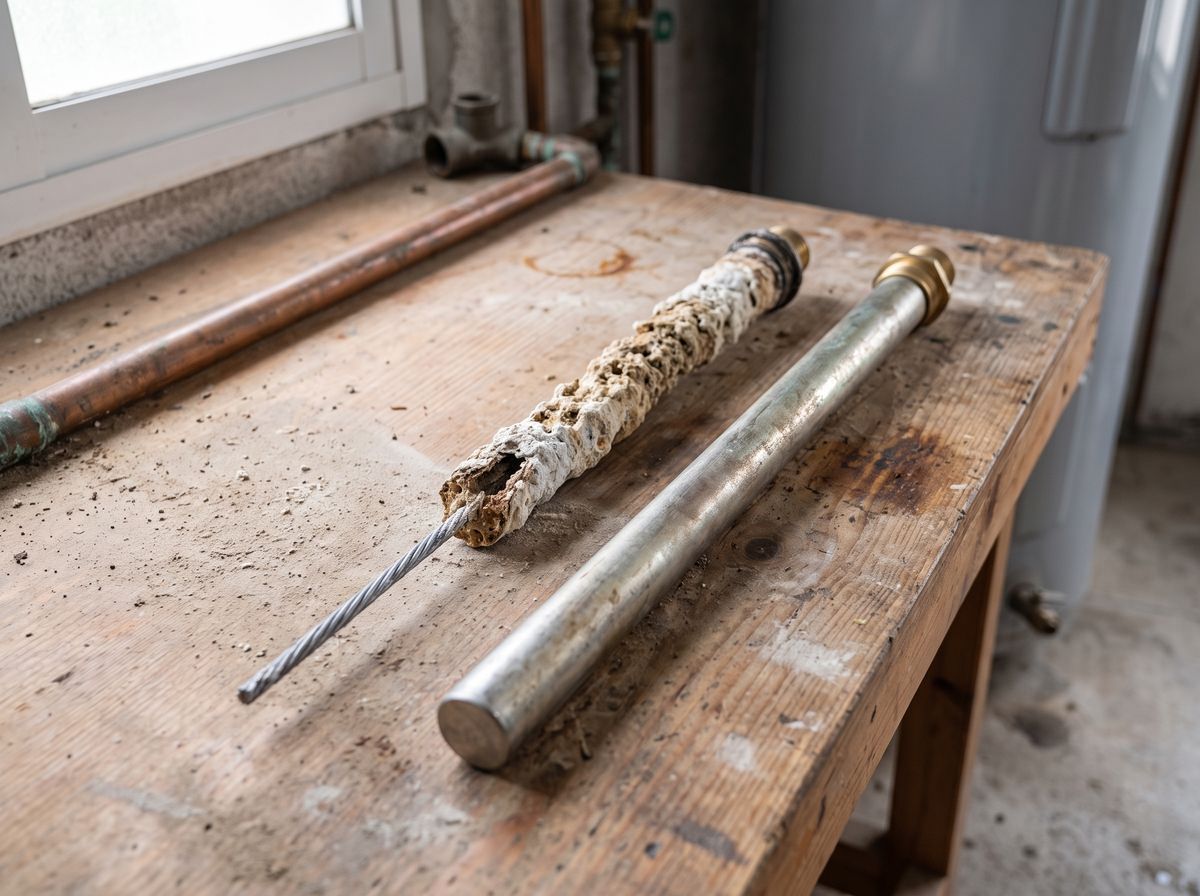
The anode rod is a sacrificial metal rod inside your tank that corrodes on purpose so the tank itself doesn’t. Checking it every 2–3 years and replacing it before it’s fully consumed is the single most effective thing you can do to extend a tank water heater’s life.

Likely Causes, Ranked
- Magnesium anode
The standard factory rod on most tanks; can contribute to the sulfur-smell reaction in some water chemistries. - Aluminum/zinc anode
An alternative that can reduce sulfur odor in affected households. - Powered (impressed current) anode
Doesn’t sacrifice itself at all — lasts the life of the tank, at a higher upfront cost.
Step-by-Step Diagnosis
- DIY WITH CAUTION
Check the anode rod every 2–3 years
Sooner in areas with soft or treated water, which consumes anodes faster. - DIY WITH CAUTION
Turn off water and power/gas, relieve tank pressure, then remove the anode access plug or hex head
Some tanks have a dedicated access point; on others, the anode is combined with the hot outlet fitting. - DIY WITH CAUTION
Inspect the rod: if more than 6 inches of core wire is exposed, replace it
A consumed anode leaves the tank unprotected. - DIY WITH CAUTION
Choose a replacement type based on your specific issue
Standard magnesium for most cases; aluminum/zinc if you have a sulfur-smell issue; powered if you want to stop maintaining it entirely.
FAQ
Do I need to replace my anode rod?
If more than 6 inches of the core wire is exposed, yes — an exhausted anode means the tank itself starts corroding next.
Which anode rod is best?
Depends on your situation: magnesium is standard, aluminum/zinc helps with sulfur odor, and a powered anode trades a higher upfront cost for essentially no maintenance.
How does an anode rod work in a water heater?
It corrodes preferentially to the steel tank via a basic electrochemical reaction, sacrificing itself so the tank doesn’t rust through.
Written by HotWater Decoded — water heater repair specialists. Technically reviewed by a licensed technician on our team.
- Standard anode rod maintenance and material comparison, well documented across manufacturer and water-treatment sources
Home · About · Contact ·
Privacy Policy · Terms & Conditions ·
Disclaimer · Editorial Policy
© 2026 HotWater Decoded. All rights reserved.