
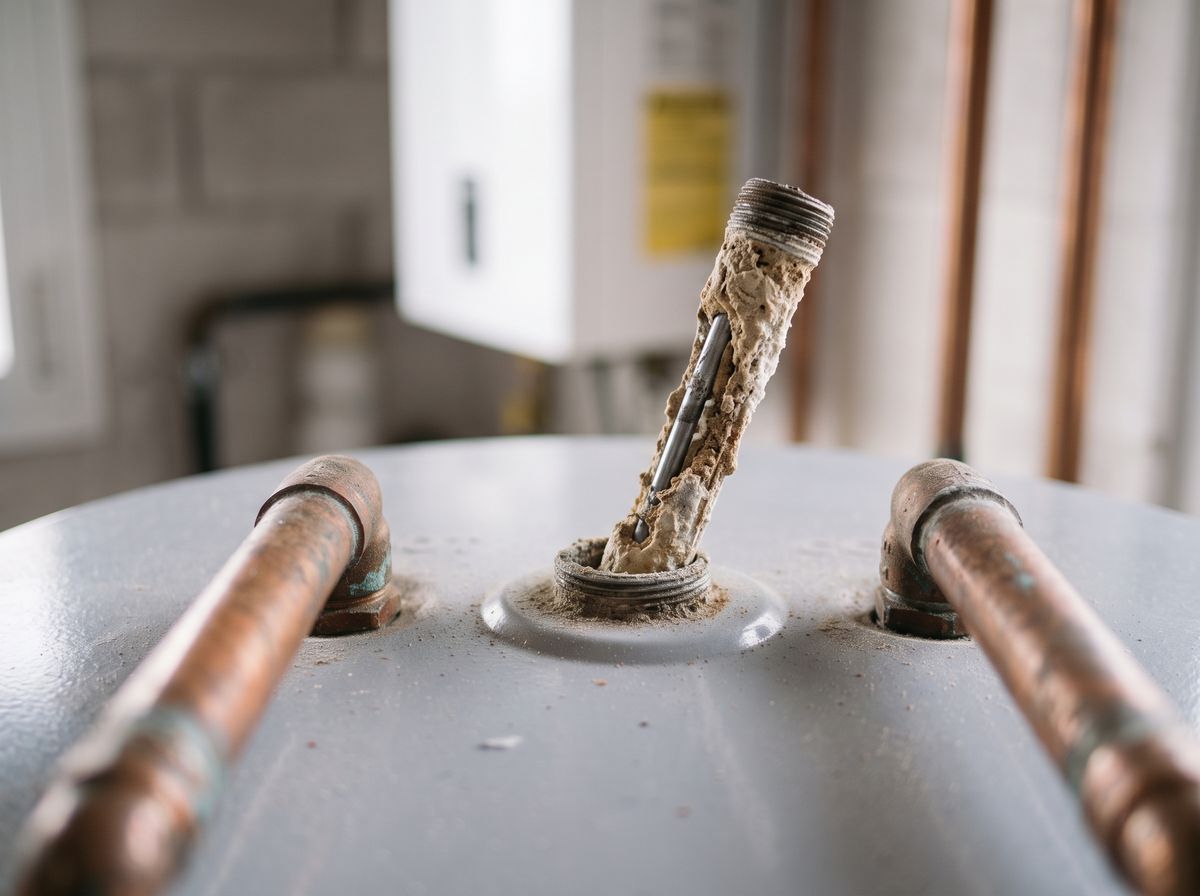
Replacing an anode rod takes about 30 minutes with basic tools: shut off water and power/gas, relieve tank pressure, break the rod loose with a breaker bar and the right socket, pull the old rod, and thread in the new one with fresh tape or pipe dope.

Step-by-Step Diagnosis
- DIY SAFE
Turn off the cold water supply and power (electric) or gas (gas unit)
Standard safety shutdown before opening the tank. - DIY SAFE
Relieve tank pressure by opening a hot water tap elsewhere in the house
Prevents pressure fighting you when you loosen the anode. - DIY SAFE
Locate the anode access point
A dedicated hex-head plug on top of the tank, or combined with the hot-outlet nipple on some models — check your model first. - DIY WITH CAUTION
Break the anode loose with a breaker bar and the correct socket (commonly 1¹1/16″, but confirm for your model)
It’s usually torqued tight from the factory — a standard ratchet often isn’t enough leverage. - DIY WITH CAUTION
Withdraw the old rod — note if ceiling height limits full withdrawal
Flexible/segmented anode rods exist specifically for low-clearance installs like a garage with a low ceiling. - DIY SAFE
Inspect the old rod: if more than 6 inches of core wire is exposed, replacement was overdue
Good confirmation you’re doing the right maintenance at the right time. - DIY WITH CAUTION
Apply fresh thread tape or pipe dope to the new rod and thread it in
Tighten firmly but don’t overtorque and crack the tank fitting. - DIY SAFE
Restore water, power/gas, and check for leaks at the access point
Let it run a few minutes and recheck before considering the job done.
FAQ
How much does it cost to replace an anode rod?
The part itself is inexpensive; if you’re paying a plumber for the labor, expect a modest service-call-level cost rather than anything close to a full replacement.
How often do you replace an anode rod?
Check every 2–3 years; replace sooner in areas with soft or treated water, which consumes anodes faster.
Does my water heater have an anode rod?
Almost every standard tank water heater does — tankless units generally don’t, since there’s no tank to protect from corrosion the same way.
Written by HotWater Decoded — water heater repair specialists. Technically reviewed by a licensed technician on our team.
- Standard anode rod replacement procedure, consistent across manufacturer service documentation
Home · About · Contact ·
Privacy Policy · Terms & Conditions ·
Disclaimer · Editorial Policy
© 2026 HotWater Decoded. All rights reserved.