
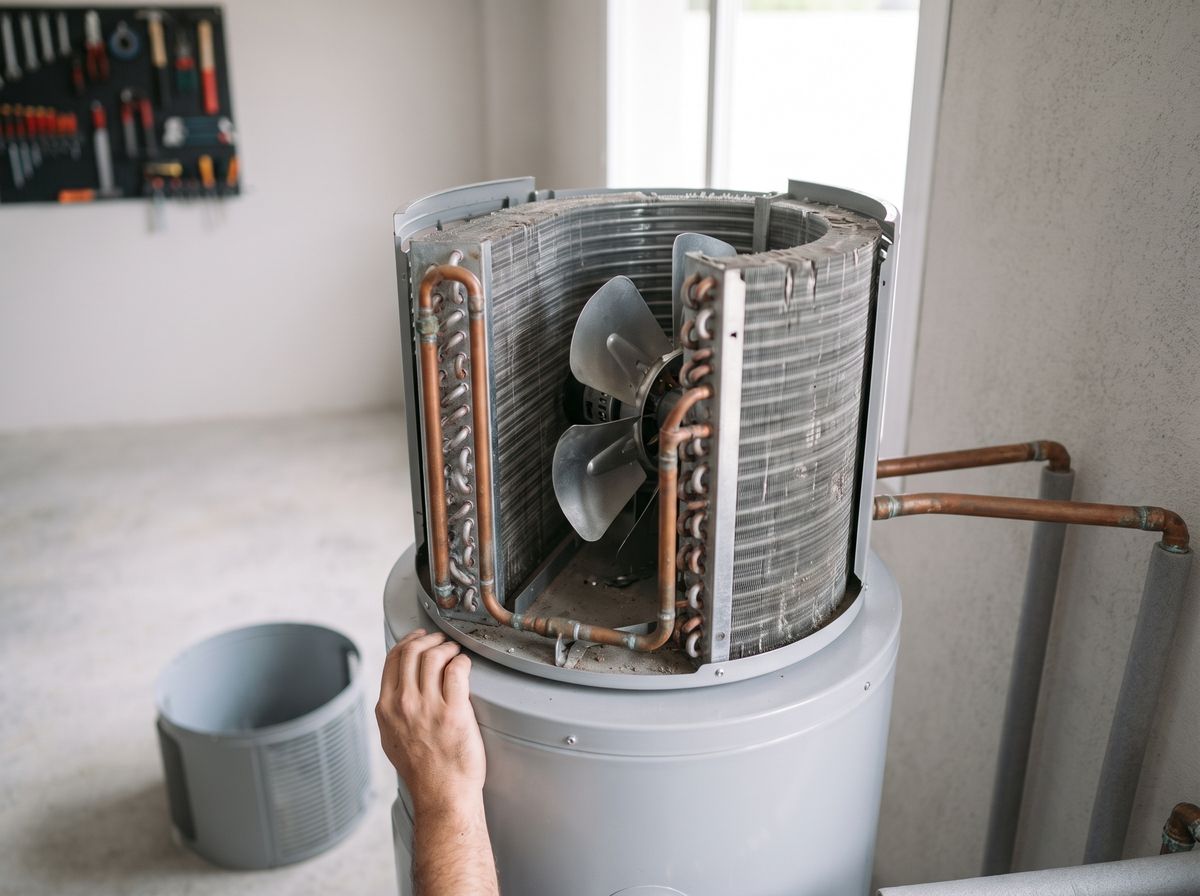
A heat pump water heater uses electricity to move heat from the surrounding air into the tank instead of generating heat directly — making it up to three to four times more efficient than a standard electric resistance water heater. That efficiency comes with tradeoffs: higher upfront cost, some noise, and cooling/dehumidifying the space it sits in.

Likely Causes, Ranked
- How it actually works
A fan pulls room air across evaporator coils filled with refrigerant; a compressor warms that refrigerant gas, which then passes through condenser tubing wrapped around the tank to heat the water. - Why it’s more efficient
Moving existing heat costs far less energy than generating new heat, the same principle behind a standard air conditioner or refrigerator run in reverse.
Step-by-Step Diagnosis
- DIY SAFE
Check your space’s size and temperature
These units work best in a space of roughly 700+ cubic feet that stays above 40–45°F — a cold, small closet is a poor fit. - DIY SAFE
Understand the noise level before buying
They run more like a small window AC unit than a silent tank — not loud, but noticeable, which matters if it’s near a bedroom. - DIY WITH CAUTION
Check the electrical requirements for your specific model
120V plug-in models exist now alongside traditional 240V units — confirm which your panel and outlet situation supports. - DIY WITH CAUTION
Budget for a higher upfront cost than a standard tank
Expect roughly 2–3x the equipment cost of a standard electric tank, offset over time by lower operating costs. - DIY SAFE
Ask about the space’s dehumidifying side effect
These units cool and dehumidify the room they’re in — a bonus in a damp basement, a downside in an already-cool space.
FAQ
What are the downsides of a heat pump water heater?
Higher upfront cost, some operating noise, reduced output in cold spaces, and the need for adequate air volume around the unit.
Is a heat pump water heater worth the money?
Usually yes over its lifespan through lower electricity use, but the payback period depends heavily on your local electricity rates and available rebates.
Why don’t contractors like heat pumps?
Some installers are less familiar with the technology and the specific electrical/space requirements, which can lead to reluctance or higher quoted install costs — not a reflection of the technology itself.
Which is better, a tankless water heater or a heat pump water heater?
Different tradeoffs: tankless gives on-demand hot water with no standby loss; heat pump gives very low running cost but needs the right space. See our dedicated comparison page.
Written by HotWater Decoded — water heater repair specialists. Technically reviewed by a licensed technician on our team.
- Google’s AI Overview summary, ENERGY STAR, NYSERDA, and Rheem manufacturer pages
Home · About · Contact ·
Privacy Policy · Terms & Conditions ·
Disclaimer · Editorial Policy
© 2026 HotWater Decoded. All rights reserved.