
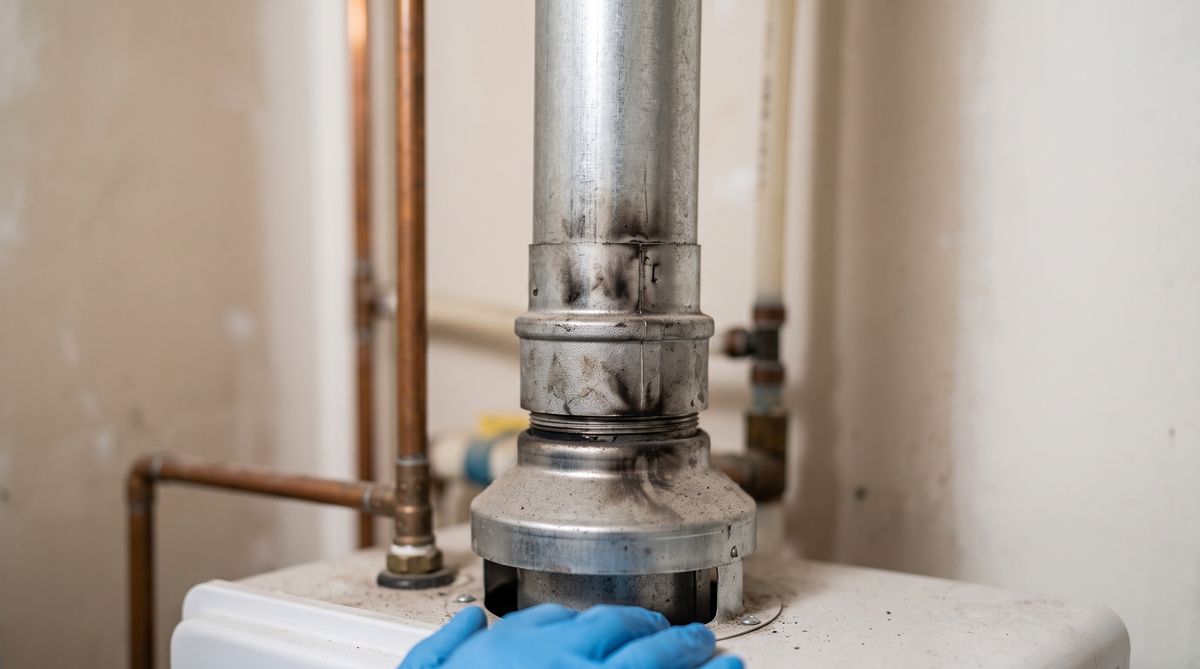
Condensing tankless units vent with PVC or CPVC because their exhaust runs cool enough (roughly 100–140°F) not to melt plastic. Non-condensing units exhaust much hotter and require stainless steel or another manufacturer-listed high-temperature material — using PVC on a non-condensing unit isn’t just inefficient, it’s a genuine safety and code violation.

Likely Causes, Ranked
- Condensing units
Extract extra heat from the exhaust before it leaves, cooling it enough to safely use PVC or CPVC venting. - Non-condensing units
Exhaust stays hot enough that only stainless steel or another specifically listed material is safe and code-compliant.
Step-by-Step Diagnosis
- DIY SAFE
Confirm whether your unit is condensing or non-condensing before buying vent material
This isn’t optional — it’s determined by the unit, not a personal preference. - DIY WITH CAUTION
Follow the manual’s maximum vent length and elbow-count limits exactly
Exceeding them causes airflow problems that show up as venting-related error codes. - PRO ONLY
Respect the vent termination clearances from windows, doors, and property lines
These are code requirements, not suggestions — get them wrong and inspection will fail.
FAQ
Can I use PVC on any tankless water heater?
Only if it’s a condensing model and PVC/CPVC is specifically listed as approved in that model’s installation manual. Never assume — check.
Written by HotWater Decoded — water heater repair specialists. Technically reviewed by a licensed technician on our team.
- Manufacturer venting specifications distinguishing condensing and non-condensing tankless models
- International Fuel Gas Code venting material and clearance requirements
Home · About · Contact ·
Privacy Policy · Terms & Conditions ·
Disclaimer · Editorial Policy
© 2026 HotWater Decoded. All rights reserved.