
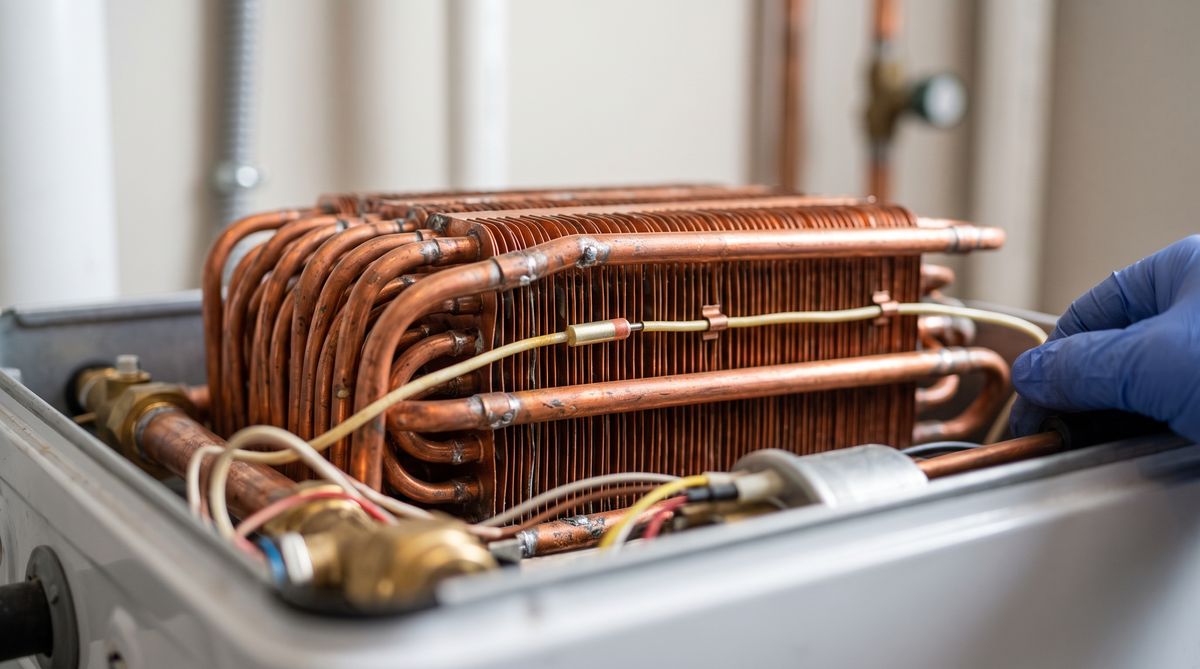
Condensing tankless water heaters use a secondary heat exchanger to pull extra heat out of the exhaust before it leaves, which raises efficiency and lets them vent with cheap PVC — but that process creates acidic condensate that has to be drained (and sometimes neutralized). Non-condensing units are simpler and often cheaper, but need pricier stainless venting and run somewhat less efficiently.

Likely Causes, Ranked
- Condensing: higher efficiency, PVC venting, condensate to manage
The extra heat exchanger is what makes both the efficiency gain and the condensate handling requirement. - Non-condensing: simpler, stainless venting, no condensate
Fewer components to fail, but venting material costs more and overall efficiency is somewhat lower.
FAQ
Which one should I buy?
Condensing units generally make more sense as a primary whole-house unit where the efficiency gain and PVC venting savings offset the extra condensate handling. Non-condensing units can make sense for simpler installs or where condensate drainage is genuinely impractical.
Written by HotWater Decoded — water heater repair specialists. Technically reviewed by a licensed technician on our team.
- Manufacturer efficiency ratings (UEF) and venting specifications comparing condensing and non-condensing tankless product lines
Home · About · Contact ·
Privacy Policy · Terms & Conditions ·
Disclaimer · Editorial Policy
© 2026 HotWater Decoded. All rights reserved.