
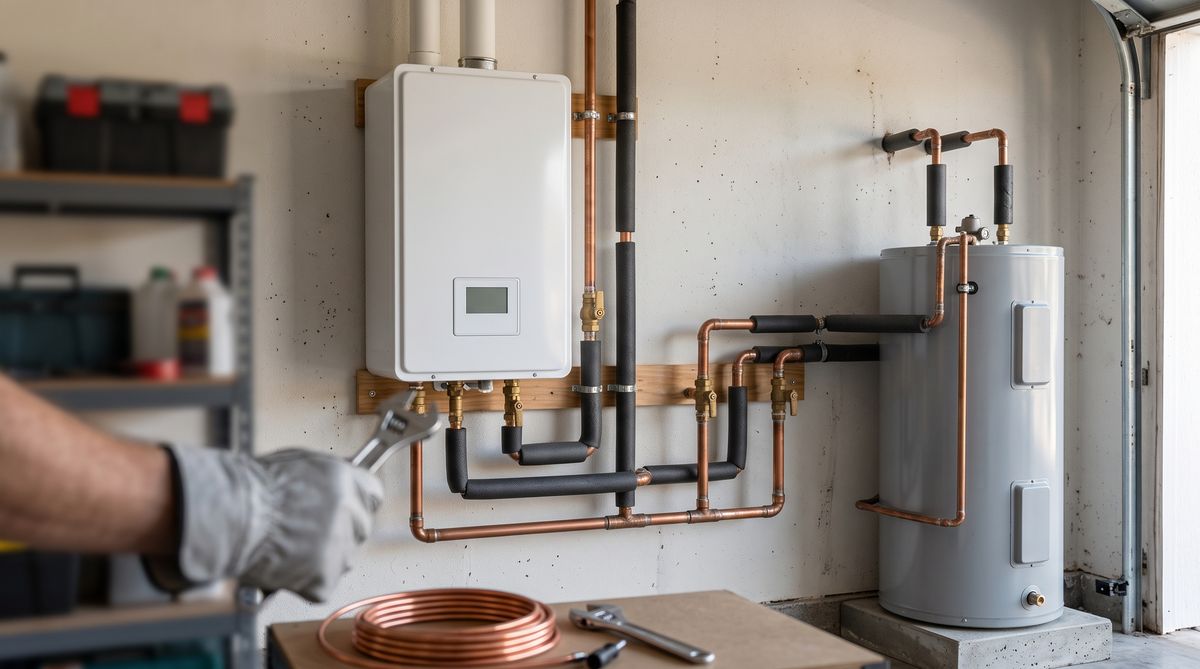
Over a 15-year horizon, tankless usually costs more upfront (higher unit price, sometimes more complex installation) but less over time, because it doesn’t waste energy keeping a tank of water hot around the clock and typically lasts longer before replacement. Whether that gap closes fast enough to matter depends on how much hot water your household actually uses.

Likely Causes, Ranked
- Standby loss
A tank water heater keeps 40–80 gallons hot 24/7, even when no one’s home. Tankless only heats water on demand. - Lifespan difference
Tank units typically last 8–12 years; tankless units are often rated for 15–20 years, which changes how many replacement cycles you’re comparing over the same 15-year window. - Upfront and installation cost
Tankless installation, especially a first-time conversion from tank, often costs more due to gas line and venting requirements.
Step-by-Step Diagnosis
- DIY SAFE
Estimate your realistic 15-year cost for each option
Purchase price + installation, plus one likely tank replacement partway through the 15 years if you stick with tank, versus a single tankless purchase that likely outlasts the whole period. - DIY SAFE
Factor in your actual hot water usage pattern
Heavy, spread-out usage across the day favors tankless’s on-demand model; a household with predictable usage patterns narrows the standby-loss gap.
FAQ
Is tankless always cheaper over 15 years?
Not always — it depends on your installation cost and usage pattern. It’s usually cheaper for households with high, spread-out hot water demand and more expensive for very light users who’d rarely trigger the standby-loss penalty of a tank anyway.
Written by HotWater Decoded — water heater repair specialists. Technically reviewed by a licensed technician on our team.
- ENERGY STAR lifespan data for tank vs. tankless units, and Angi/HomeGuide installed cost data for both categories
Home · About · Contact ·
Privacy Policy · Terms & Conditions ·
Disclaimer · Editorial Policy
© 2026 HotWater Decoded. All rights reserved.