
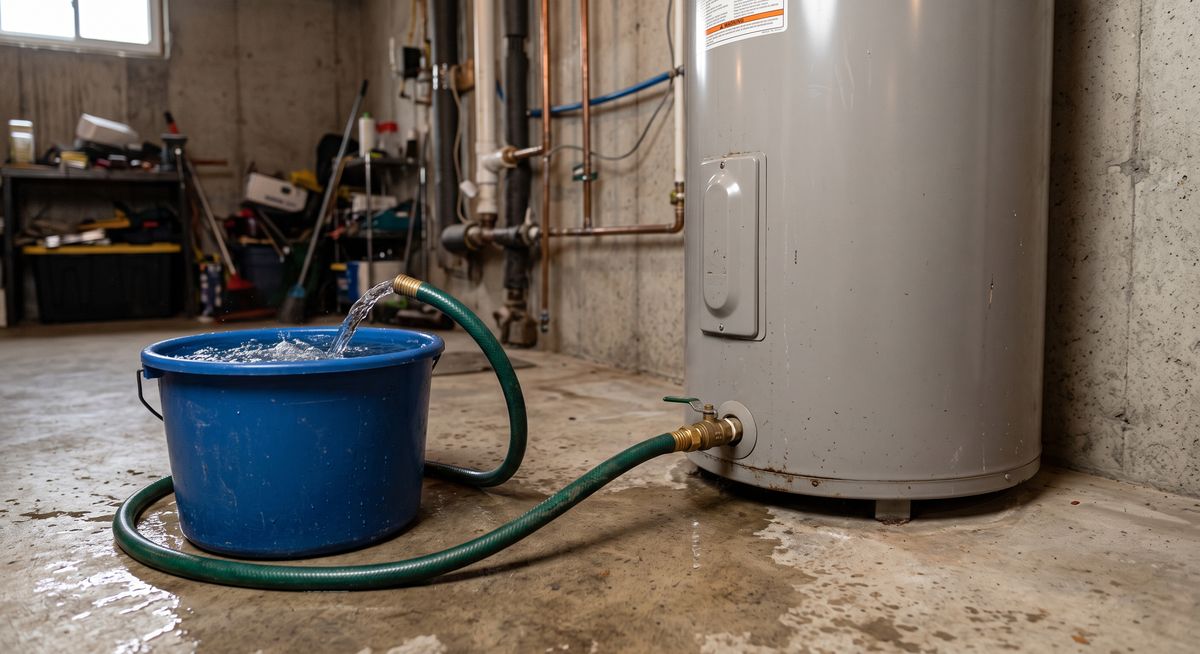
Flushing a tank water heater means draining sediment out through the bottom drain valve using a garden hose — a much simpler process than the recirculating descaling procedure a tankless unit needs, since a tank just needs the loose sediment physically flushed out rather than mineral scale dissolved.

Step-by-Step Diagnosis
- DIY SAFE
Turn off power (electric) or set the gas valve to pilot (gas), and shut off the cold water supply
Standard safety shutdown before opening any drain point. - DIY SAFE
Connect a garden hose to the drain valve and run it to a safe drainage point
A floor drain, outside, or a large bucket — the water will be very hot at first. - DIY SAFE
Open a hot water tap somewhere in the house to break the vacuum
Without this, the tank won’t drain properly. - DIY SAFE
Open the drain valve and let the tank empty
Watch for sediment in the flow, especially near the end — it often comes out cloudy or gritty first. - DIY WITH CAUTION
For heavy sediment, briefly turn the cold water supply back on with the drain valve still open
This stirs up and flushes out sediment stuck to the bottom more effectively than a single drain. - DIY SAFE
Close the drain valve, refill the tank, then restore power/gas
Let the tank fill completely before restoring power to avoid running elements dry (electric units).
FAQ
How often should I flush my tank water heater?
Once a year is the common recommendation, more often in hard-water areas.
Can you fix a leaking water heater by flushing sediment?
No — flushing addresses sediment buildup and the noise/efficiency problems it causes, not leaks. If your unit is also leaking, see our leak diagnosis guide instead.
Should I skip flushing if my water heater is very old?
If a drain valve has never been opened on an old tank, it can seize or fail to reseal properly. If you’re not confident it will reseal, weigh that risk against the benefit — sometimes it’s better to leave a very old tank alone and plan for replacement instead.
Written by HotWater Decoded — water heater repair specialists. Technically reviewed by a licensed technician on our team.
- Standard tank flush procedure consistent across A.O. Smith, Rheem, and Bradford White owner’s manuals
Home · About · Contact ·
Privacy Policy · Terms & Conditions ·
Disclaimer · Editorial Policy
© 2026 HotWater Decoded. All rights reserved.