
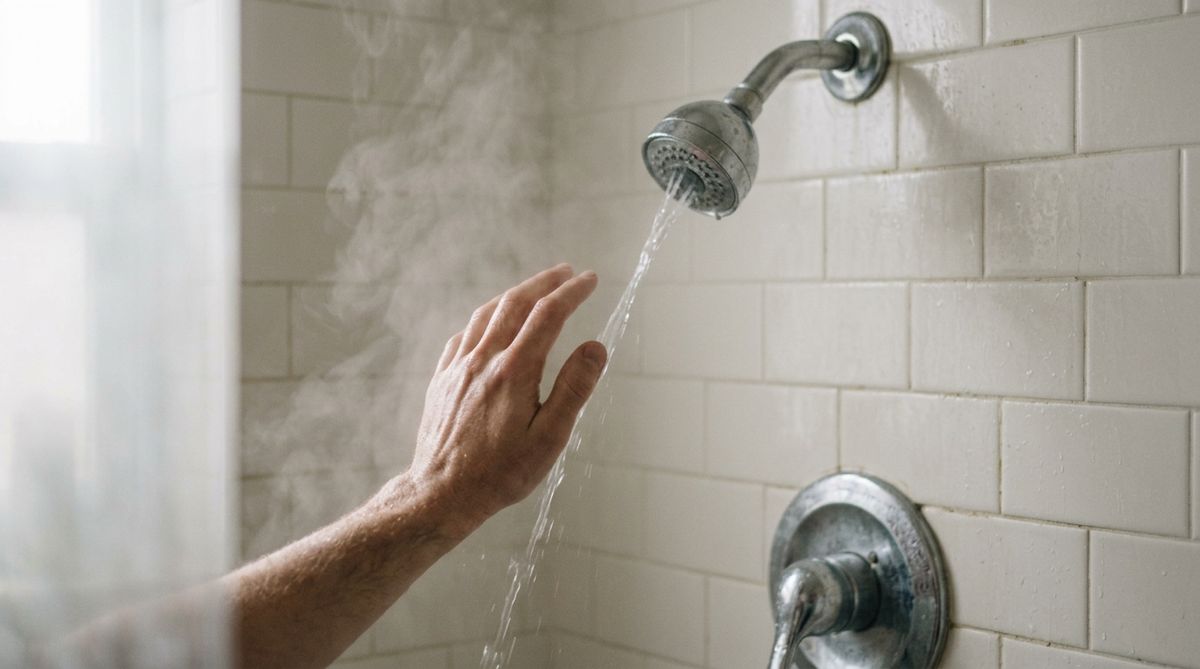
120°F is the commonly recommended water heater thermostat setting: hot enough to limit bacterial growth like Legionella, cool enough to meaningfully reduce scald risk compared to higher settings. Testing and replacing a thermostat is a straightforward job once you know where to look.

Likely Causes, Ranked
- Set too low
Below roughly 120°F, the tank sits in a temperature range where bacteria like Legionella can survive and grow. - Set too high
Above about 140°F, scald risk from tap water rises sharply, especially for children and older adults. - Thermostat reading inaccurately
The dial setting and the actual water temperature at the tap can drift apart over time as a thermostat ages.
Step-by-Step Diagnosis
- DIY SAFE
Measure actual temperature at a hot tap with a simple thermometer
This tells you if your thermostat’s dial setting matches reality — don’t just trust the dial. - DIY WITH CAUTION
If temperature is off by more than a few degrees, the thermostat may need replacement rather than just adjustment
A thermostat that can’t hold a consistent setpoint is failing, not miscalibrated. - DIY WITH CAUTION
To replace: power off, drain enough water to expose the access panel, and swap the failed thermostat for a matching replacement
Match the replacement to your exact tank’s voltage and wattage rating — this isn’t a universal part.
FAQ
What temperature should my water heater be set to?
120°F is the standard recommendation, balancing bacterial safety against scald risk.
Why is my water heater not as hot as the dial says?
A drifting or failing thermostat is the most common cause — test with an actual thermometer at the tap rather than trusting the dial alone.
Written by HotWater Decoded — water heater repair specialists. Technically reviewed by a licensed technician on our team.
- CDC and DOE guidance on water heater temperature setting, balancing Legionella risk against scald risk
Home · About · Contact ·
Privacy Policy · Terms & Conditions ·
Disclaimer · Editorial Policy
© 2026 HotWater Decoded. All rights reserved.