
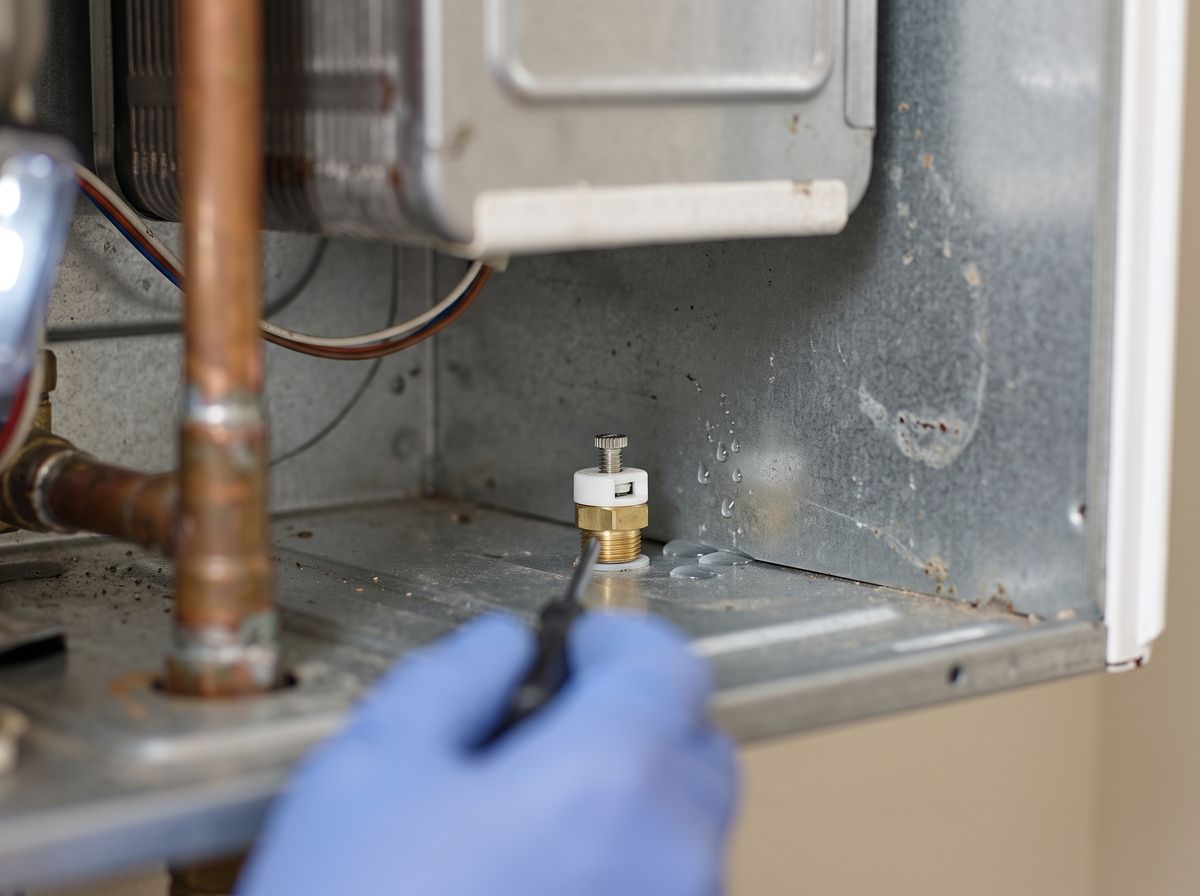
A leak from the top of a water heater usually comes from the T&P (temperature & pressure) relief valve, the anode rod access plug, or the cold-inlet/hot-outlet fittings — not the tank itself, which is good news for your budget.

Step-by-Step Diagnosis
- DIY SAFE
Dry the top of the tank and watch closely where water reappears
The T&P valve, the anode rod plug, and the two pipe fittings are the three usual suspects. - DIY SAFE
Check if the T&P valve is dripping from its discharge pipe
A T&P valve that’s actually doing its job (relieving excess pressure) will drip from the end of its discharge tube, not leak from its body. - DIY WITH CAUTION
Try hand-tightening the inlet/outlet fittings
A slow drip from a fitting is often just a loose connection or worn gasket. - PRO ONLY
If the T&P valve itself is leaking from its body, not just discharging
Replace it — don’t plug or disable a relief valve, ever.
FAQ
Is it dangerous if the T&P valve is dripping?
A little drip after the valve has relieved pressure can be normal. A valve that leaks continuously from its body needs replacement — never cap or plug it.
Related guides: Water Heater Leaking · Water Heater T&P Relief Valve Dripping
Written by HotWater Decoded — water heater repair specialists. Technically reviewed by a licensed technician on our team.
Sources
- Standard T&P valve function and leak-source diagnosis
Home · About · Contact ·
Privacy Policy · Terms & Conditions ·
Disclaimer · Editorial Policy
© 2026 HotWater Decoded. All rights reserved.