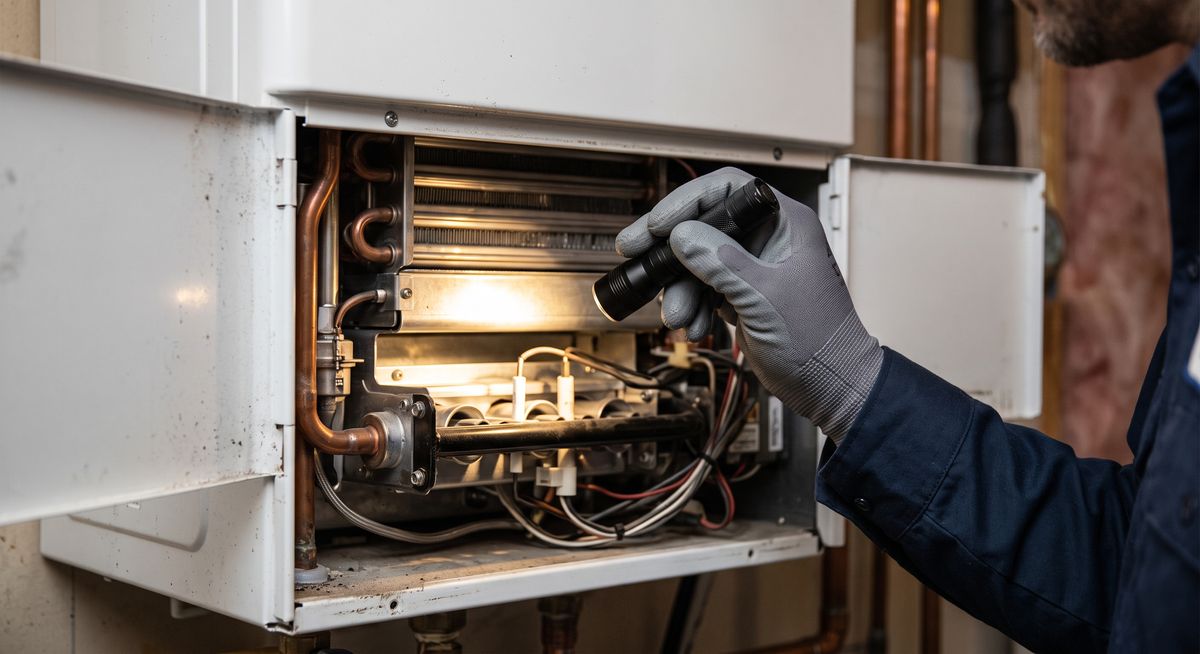
Rinnai code 14 means an internal thermal fuse tripped because part of the unit overheated. This is a one-time safety fuse on many models — it protects against a bigger failure, so finding and fixing the overheating cause matters more than clearing the code.

Likely Causes, Ranked
- Restricted combustion air or exhaust
Same family of causes as code 10 — reduced airflow raises internal temperatures. - Heat exchanger scale buildup
Reduces heat transfer efficiency, so parts run hotter than designed. - Failed internal component
A fan or control board fault that let temperatures climb undetected.
Step-by-Step Diagnosis
- DIY WITH CAUTION
Do not simply reset and move on
A tripped thermal fuse is a symptom, not the problem. Repeated resets without diagnosis risk a bigger failure. - DIY SAFE
Check for the same airflow issues covered under code 10
Blocked vent, dirty filter, or a damaged vent run. - DIY WITH CAUTION
If the unit is overdue for a flush, schedule one
Scale buildup in hard-water areas is a documented contributor to overheating-related faults across tankless brands. - PRO ONLY
Bring in a licensed technician for fuse replacement
On most models this fuse isn’t a homeowner-replaceable part, and the underlying heat source needs to be found first.
FAQ
Can I reset Rinnai code 14 myself?
You can try, but if you haven’t found what caused the overheating, expect it to come back — or worse.
Written by HotWater Decoded — water heater repair specialists. Technically reviewed by a licensed technician on our team.
Sources
- General thermal-protection pattern across gas tankless units, cross-referenced with airflow-related codes on the same platform
Home · About · Contact ·
Privacy Policy · Terms & Conditions ·
Disclaimer · Editorial Policy
© 2026 HotWater Decoded. All rights reserved.